
What I Learned Observing the Underground Race Economy
A look into the unsanctioned racing world — Badwater VR Elite 267, The Speed Project, Cease & Desist, backyard ultras and where the money actually goes.

I’ve spent the last few years observing unsanctioned races from the outside and doing the thing I can’t help doing: reverse-engineering how they actually work. Not just the hype they bring, but the business underneath it.
The pattern is always the same: an “underground” race gets announced, runners pay a real buy-in (not subsidized, often more than the most popular sanctioned races) and what you get back is often no marked course, no insurance, and a few genuinely sketchy scenarios. I don’t say that as if no work goes into these races. Someone still has to build the route, verify finishers, distribute prizes.
I’m genuinely interested in how it all works and what makes some of these events so successful. I just wanted to see it from the inside instead of guessing from the outside. Where does that money go?
Four stories
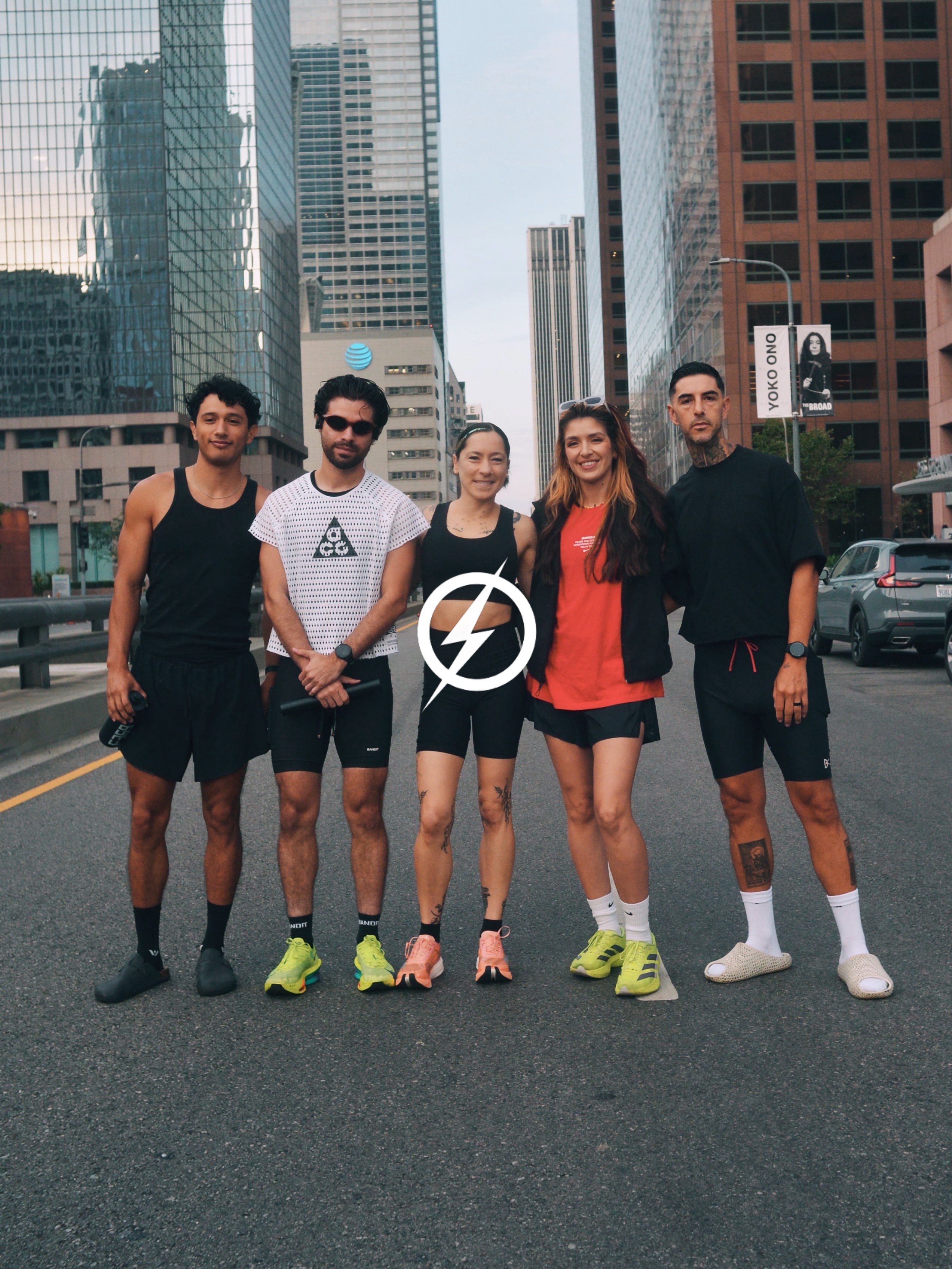
This past weekend we actually ran Cease & Desist as an Outrun.la team in the coed division and placed 7th! Koreatown Run Club’s event: 17 miles from downtown LA to the Santa Monica pier, coed/men’s/women’s/solo divisions, about 800 runners, sponsored by Nike, Propel, and Garmin. It lived up to the hype and was genuinely one of the most fun races I’ve been part of. It’s also true that nobody on our team signed a waiver, and racing across LA with no closed streets feels a little like a video game. I saw runners, myself included, run through red lights, and I watched a couple of close calls with cars that easily could’ve gone worse. Not a knock on KRC. Just the reality of pulling off something at that scale with none of the infrastructure a permitted event would have.
I recently ran the Badwater Elite Virtual Challenge — 267 miles with 16 days to finish, entirely self-directed. Entry was $150. This was virtual, so no permits, no course, no aid stations, no insurance, just a Strava group and an outdated website tracking everyone’s miles every few hours. For the few who finish? A belt buckle, a t-shirt, and a sticker you actually had to pay more for. It was an epic challenge, and I’m proud of wrapping up the 267 miles in just 14 days, with an Olympic-distance triathlon sprinkled in the middle. I signed up partly to see what $150 actually buys in that structure. I still don’t fully know where it went.
The Speed Project is one I’m genuinely excited to run myself, but I first got close to it back in 2023, when we sponsored a team through Space Bar Wellness and sent our Promaster van out as a support and recovery vehicle; compression boots, a massage therapist, the works. That was my first real look at how much money moves through an unsanctioned ~340-mile relay from Venice Beach to Las Vegas: no fixed route, no permits, wild dogs and desert heat included, and a serious amount of cash changing hands in vans, crews, hotel stays, and the after-party in Vegas. I remember it distinctly because my small business was still getting hammered by the pandemic at the time, and we were still out there donating support to teams because so much of the runners’ own money was already tied up just in participating. Clearly real money was being made on that race. I just wasn’t sure whose pocket it was ending up in.
Then there’s the backyard ultra format, Big’s Backyard Ultra, a 4.167-mile loop every hour until one runner’s left standing. No fixed distance, no fixed finish line, just races falling off one lap at a time. This is one of the most popular formats in ultrarunning because it’s simple, brutal to watch, and cheap to host.
This isn’t a niche
Once I started looking, the list kept growing: the OG Barkley Marathons (started in 1985, $1.60 entry, secretive application), the Last Annual Vol State 500K (314 miles across Tennessee, no aid stations, just strangers' "Angel Stations"), Take the Bridge (checkpoint-based, spread from New York to London to Toronto), and Unsanctioned Athletics in the UK, already sponsored by Nike, Adidas, New Balance, Hoka, Merrell, and Salomon. There's even a 31-mile ultra built around eating Taco Bell along the route. Real money, real brands, and real interest from the running community.
The part that has to be built right: trust
None of these races have a race marshal checking whether the result someone reports is the result that happened. Fine when the prize is a belt buckle. Different problem when real money’s in the pot.
So a challenge on Outrun.la layers in actual checks: heart rate cross-checked against pace, so a flat heart rate at a suspiciously fast split gets flagged. No “jumped on a scooter” problem here. GPS course adherence for anything on a defined route. Relay handoffs timestamped automatically so exchanges can’t be fudged. We’re providing tools for real checks and balances and making sure the person who ran their honest best isn’t splitting the pot with someone who didn’t.
Where this leaves me
I still don’t know where all that money goes but real money is moving through this space. Most run clubs never host their own version of it, not because they don’t want to, but because they assume they can’t. They picture the permits, the insurance, the spreadsheet of who owes who, and talk themselves out of it before they start.
That assumption is what I want Outrun.la to remove. You shouldn’t need The Speed Project’s mystique or Koreatown Run Club’s years of community building to create something your community wants to pay into. A squad of three or field of a thousand, the tools should work the same way: verified results, a transparent split, and a leader who isn’t quietly working a second job to make it happen.
The underground scene proved the demand exists. Now we want to build the infrastructure so any community can meet it and create some financial sustainability to keep their communities thriving.
Community and competition, starting with you.
— Jacob
Outrun.la is currently in alpha, building toward a 2026 launch in Los Angeles. Run one of these events yourself — or know one that deserves a mention? Let me know.